By Business Insider Reporter
Tanzania has reaffirmed its readiness to scale up commercial food exports to regional markets, with renewed engagement targeting the Democratic Republic of the Congo (DRC) seen as a strategic step toward strengthening cross-border agricultural trade and regional food security.
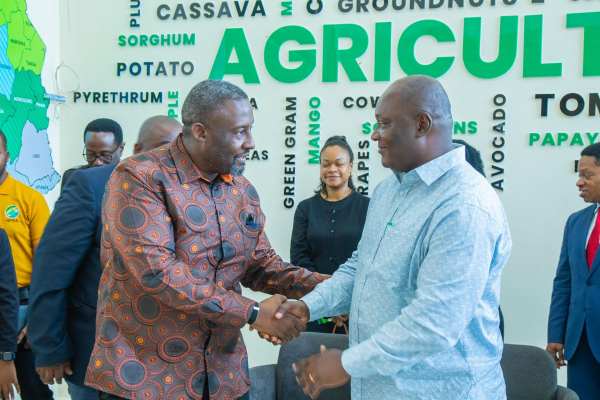
This was stated by the Minister for Agriculture, Daniel Chongolo, during recent high-level discussions in Dodoma with the Economic and Investment Advisor to the President of DRC, Tony Bandio Munongo. The talks focused on expanding cooperation across commercial sectors, with food trade identified as a key priority area.
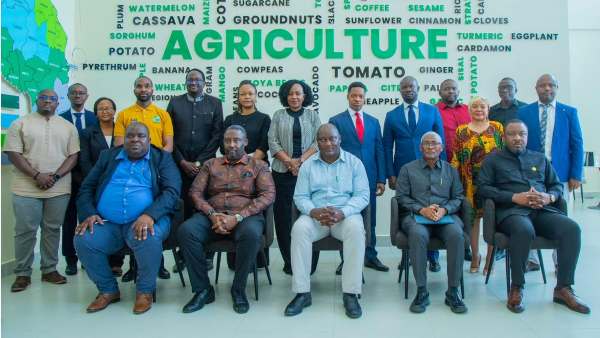
The meeting brought together senior officials from both governments, including representatives from the DRC delegation led by Fredy Matamba, alongside Tanzania’s Deputy Permanent Secretary (Crop Development and Food Security), Prof Peter Msoffe, and the Chief Executive Officer of the National Food Reserve Agency (NFRA), Andrew Komba, together with technical experts.
The engagement builds on earlier bilateral discussions initiated between Minister Chongolo and DRC’s Minister of Agriculture and Food Security, Muhindo Nzangi Butondo, held on the margins of the Global Forum for Food and Agriculture in Germany.
As part of follow-up efforts, a DRC delegation visited Tanzania in mid-March 2026 to assess the country’s food production capacity and export readiness.
During the visit, the delegation inspected maize handled by NFRA, gaining insights into quality standards, storage systems, procurement procedures, and transportation logistics that underpin Tanzania’s emerging role as a regional food supplier.
Tanzania is increasingly positioning itself as a reliable supplier of staple foods within the East African Community (EAC) and the Southern African Development Community (SADC). Surplus production – particularly of maize and other grains – combined with improved storage and reserve management systems, is enabling the country to move from food self-sufficiency toward structured exports.
Institutions such as NFRA play a critical stabilizing role by maintaining strategic reserves while also supporting market interventions that allow surplus produce to be channeled into regional trade. This creates a dual benefit: safeguarding domestic food security while unlocking export opportunities.
“Food stocks held by the National Food Reserve Agency (NFRA) reached 560,007.9 tonnes in February 2026, down from 567,469.2 tonnes in the preceding month, following the release of 7,461.3 tonnes of maize and paddy to various traders,” the Bank of Tanzania notes in a new report.
“While this resulted in a marginal contraction of the reserve, the intervention helped stabilize retail staple prices,” the central bank add in the March 2026 Monthly Economic Review.
For import-dependent markets like the DRC, Tanzania offers a geographically proximate and increasingly dependable source of staple foods, with potential to reduce supply gaps and transportation costs compared to more distant suppliers.
The push to expand food exports is closely aligned with Tanzania’s long-term development blueprint, DIRA 2050, which emphasizes structural transformation through industrialization, trade expansion, and regional integration.
Within this framework, agriculture is not only a livelihood sector but also a strategic export engine. The ability to consistently produce surplus food and supply regional markets supports several DIRA 2050 objectives:
- Regional trade integration:
- Strengthening Tanzania’s role as a key food basket within EAC and SADC markets.
- Value addition and commercialization:
- Encouraging investment in storage, processing, logistics, and agro-export systems.
- Economic diversification:
- Increasing the contribution of agriculture to foreign exchange earnings.
- Food system resilience:
- Enhancing regional food security through reliable cross-border supply chains.
Minister Chongolo emphasised that deepening cooperation with the DRC would extend beyond commodity trade to include transport systems, market access, and broader commercial linkages. The discussions also reflect Tanzania’s broader policy direction under President Samia Suluhu Hassan, which prioritizes surplus food production and the commercialization of agriculture as a pathway to regional trade leadership.