
By Business Insider Reporter
Just weeks ago, the story felt reassuring. Energy inflation was on a sharp downward trend, easing pressure on household budgets and contributing to a noticeable decline in the overall cost of living throughout February, according to the March Monthly Economic Review (MER) of the Bank of Tanzania (BoT).
This moderation in energy prices helped stabilise headline inflation and reinforced confidence in the country’s short-term macroeconomic outlook, offering relief to both consumers and businesses reliant on transport and production inputs
At fuel stations, drivers were beginning to relax. Prices had steadied. Transport fares stopped creeping upward. For the first time in months, there was a sense that things were under control.
Tanzania’s inflation stood at 3.2 percent in February 2026, comfortably within target. Core inflation had eased to 2.1 percent. Most notably, energy inflation had fallen sharply from 5.2 percent to 2.8 percent – a quiet but powerful signal that pressures were easing.
“In February 2026, headline inflation stood at 3.2 percent, unchanged from the corresponding period in 2025. The stability reflects a net effect of easing core and energy inflation, that have effectively offset seasonal pressures in food prices,” the central bank notes in the new MER.
“On a month-on-month basis, the rate edged slightly lower from the 3.3 percent recorded in January 2026, and well-anchored within the national target and compliant with both the SADC and EAC regional benchmarks,” it adds.
For many, it felt like the economy had found its footing. But that calm did not last.
A sudden turn in a distant strait
On February 28, a conflict erupted between the United States and Iran -thousands of kilometres away, but uncomfortably close in economic terms.
Almost immediately, the world’s energy system began to shake.
The Strait of Hormuz – through which about one-fifth of global oil supply passes – became a chokepoint. Shipments slowed, risks surged, and prices reacted.
Oil prices spiked above US$100 per barrel, with some jumps of over 10 percent in a single day. What had been a story of falling energy inflation suddenly became one of rising global anxiety.
“Everything starts with fuel”
Back in Tanzania, the effects are not immediate – but they are inevitable.
For Halima Mg’angi, who runs a small food stall in Mbagala, energy is the first link in a long chain.
“When fuel goes up, everything follows,” she says. “Transport, food, even cooking.”
She had just begun to benefit from lower charcoal and fuel costs. Cooking oil deliveries became cheaper. Transport costs stabilized. Customers returned. But now, uncertainty is back.
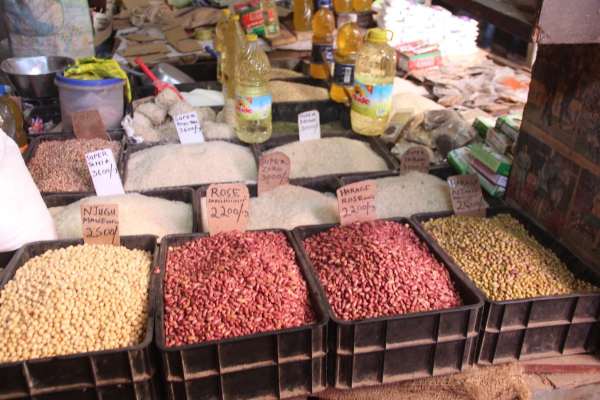
Globally, analysts warn that higher oil prices quickly spill into food systems -raising the cost of transport, fertilizers, and production. And in Tanzania, where food inflation is already elevated at 5.7 percent, the risk is clear: relief could be short-lived.
From stability to fragility
The February data told a powerful story:
- Inflation was stable
- Monetary policy was working
- Energy pressures were easing
It was, in many ways, a textbook example of macroeconomic stability.
But the war has exposed a deeper truth: stability can be fragile. Energy inflation had dropped because global prices were easing. Now, those same global forces are reversing.
A rise in oil prices does not just affect fuel pumps – it reshapes the entire economy:
- Transport costs rise
- Business expenses increase
- Food prices come under pressure
- Household budgets tighten
And often, the impact is delayed – but persistent.
The human cost of global shocks
For motorcycle (boda boda) riders, it means thinner margins again. For transport operators, it means difficult fare decisions. For families, it may mean cutting back on essentials.

The irony is striking: just as Tanzanians began to feel the benefits of lower energy inflation, a distant geopolitical conflict threatens to take them away.
A test for policy – and resilience
For policymakers, this moment is a test.
The earlier drop in energy inflation showed that Tanzania’s economic management is working. Inflation is anchored. Systems are functioning. Confidence is strong.
But the new reality demands something more: resilience. Because while monetary policy can control domestic conditions, it cannot stop a global oil shock.
The story is no longer just about inflation
This is no longer just a story about numbers – 3.2 percent, 2.8 percent, 5.7 percent. It is a story about how quickly progress can be disrupted.
A story about how global events travel into local lives.
And a reminder that in today’s interconnected world, a conflict in one region can reshape the cost of living in another – almost overnight.
Waiting again
At bus stops across the country, commuters are watching prices again – this time more cautiously. The question is no longer whether inflation is stable. It is whether it will stay that way. For now, Tanzania stands on a strong foundation. But as global oil markets turn volatile, the real test is just beginning.