
By Business Insider Reporter
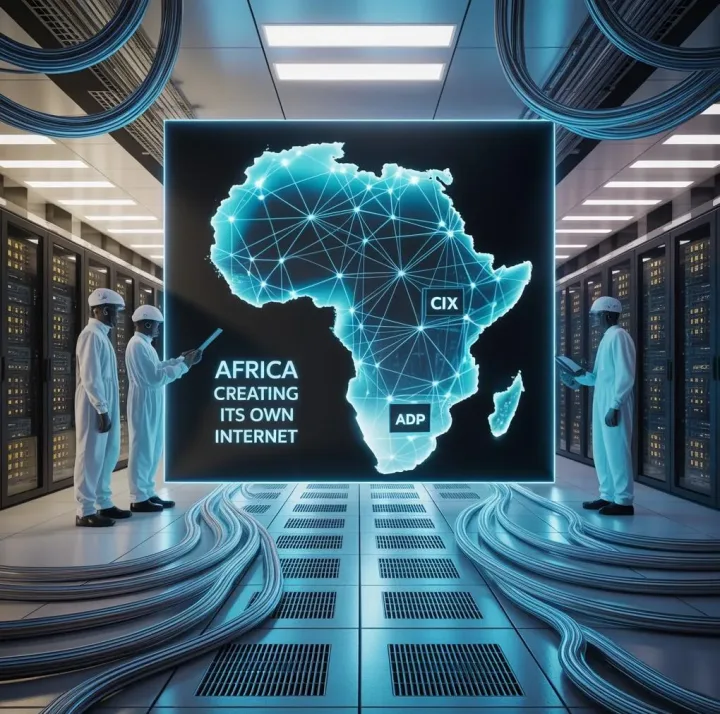
Africa has just taken one of its boldest steps yet toward digital sovereignty. On September 1, the African Union switched on the Continental Internet Exchange (CIX) – a sweeping project designed to connect Africa’s 1.4 billion people through a shared, continent-wide digital backbone.
Far from being a “separate internet,” the CIX is a unified infrastructure that keeps African data local, reduces costs, and accelerates connectivity.
For businesses across the continent, the economic implications are profound. For global tech giants, it signals a shift in the balance of power.
Lower costs, faster growth for African enterprises
For decades, most African internet traffic was routed through Europe or the US – even when a user in Nairobi was emailing someone in Johannesburg.
This created high latency, costly bandwidth, and dependency on foreign providers.
With the launch of CIX, data between African cities now travels directly, reducing latency by up to 50 percent and slashing bandwidth costs by as much as half.
For African businesses -from fintech startups in Lagos to e-commerce platforms in Dar es Salaam – this translates into faster transactions, cheaper cloud hosting, and a more reliable digital backbone.
Analysts project that the digital economy could add $180 billion to Africa’s GDP by 2025, with CIX providing the critical infrastructure to unlock that growth.

A new playing field for african startups
The move is also about leveling the competitive landscape. Africa currently spends over US$50 billion annually on foreign-owned digital services.
By localising data and cutting costs, CIX opens the door for homegrown apps, search engines, and cloud providers that can serve Africa’s 2,000+ languages and diverse markets more effectively than Silicon Valley.
“CIX creates the kind of infrastructure that allows African innovators to compete on home turf,” said a Nairobi-based venture capitalist. “For once, we are not just consumers of Western platforms — we have the tools to build our own.”
Why big tech is worried
Global platforms like Google, Amazon, and Microsoft remain accessible, but they are no longer the default gateway to Africa’s digital economy.
Data sovereignty rules under the African Digital Protocol (ADP) mean African data stays in Africa unless intentionally exported.
That not only protects citizens from foreign surveillance but also ensures that revenues generated from digital services circulate within African economies.
For Big Tech, this represents a direct challenge to their dominance.
Digital freedom or digital fragmentation?
The promise of CIX also raises questions. Who controls the flow of African data – governments, regional regulators, or private operators?
Could sovereignty tip into censorship if political leaders use the infrastructure to tighten control over information?
For businesses, digital freedom is critical. Investors and entrepreneurs will be watching closely to see whether the system fosters openness or creates new barriers to cross-border trade.

Challenges ahead
Despite the excitement, hurdles remain. Broadband penetration in Africa is still uneven, with rural regions lagging far behind urban centers.
Political coordination across 54 AU member states is another test, as divergent regulations could slow progress.
But the momentum is undeniable. Over 200 million users migrated to CIX-connected services within its first three days – one of the fastest adoption rates in global tech history.
The bottom line
The launch of the Continental Internet Exchange is a watershed moment for Africa’s digital economy.
For businesses, it promises lower costs, faster services, and a stronger foundation for innovation.
For consumers, it offers the prospect of cheaper internet and greater data security.
For policymakers, it represents both an opportunity and a responsibility: to ensure that Africa’s march toward digital sovereignty does not come at the expense of digital freedom. By 2027, when CIX aims for full coverage, Africa may no longer be at the periphery of the global internet economy. Instead, it could emerge as one of its most dynamic frontiers.