

By Business Insider Correspondent, Zanzibar
Tanzania is stepping up efforts to strengthen the management of carbon projects as the government seeks to turn the country’s natural resources into a source of climate finance while protecting national and community interests.
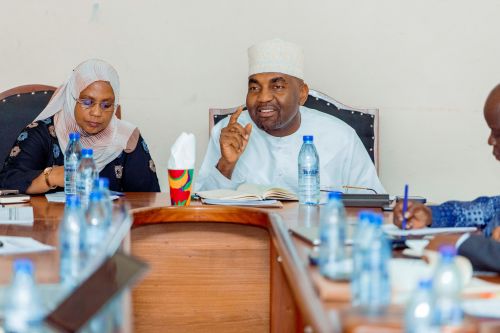
The strategy was discussed in a meeting between Hamad Yussuf Masauni, Minister of State in the Vice-President’s Office responsible for Union and Environment Affairs, and Ashatu Kijaji, Minister for Natural Resources and Tourism.
The ministers agreed on the need for closer coordination between their ministries to improve the implementation and oversight of carbon market projects across Tanzania.
The move comes as carbon markets increasingly emerge as a potential source of private investment and climate finance for developing countries, particularly those with large forest and natural-resource assets.
For Tanzania, the opportunity is substantial. Its extensive forests and other natural ecosystems can absorb and store carbon, creating the potential for projects that generate carbon credits while supporting conservation and sustainable land management.
But the government is also seeking to ensure that carbon trading does not become an avenue through which the country’s natural resources are exploited without delivering meaningful returns to Tanzania and the communities hosting the projects.
The latest discussions therefore point to a balancing act: creating an attractive investment environment for carbon projects while strengthening safeguards around environmental protection, transparency, revenue-sharing and community benefits.
Forests at the centre
Tanzania’s forests are among its most important natural carbon sinks, giving the country a strong potential position in the emerging carbon economy.
Carbon projects can generate credits by reducing greenhouse-gas emissions or removing carbon dioxide from the atmosphere. These credits can subsequently be traded in carbon markets, subject to applicable standards and regulatory requirements.
Projects can include forest conservation and restoration, sustainable land management, improved agricultural practices and clean-energy initiatives.
For investors, the attraction lies in the possibility of generating revenue from measurable emissions reductions while financing projects with environmental and social benefits.
For Tanzania, the broader opportunity is to use carbon finance to support conservation, rural livelihoods and sustainable development while attracting additional private capital into the environmental sector.
Beyond climate finance
Tanzania is a party to major international climate agreements, including the United Nations Framework Convention on Climate Change (UNFCCC), the Kyoto Protocol and the Paris Agreement.
These frameworks require countries to pursue measures to reduce greenhouse-gas emissions and strengthen their ability to adapt to the impacts of climate change.
Emission reductions can be achieved through nature-based solutions such as forest conservation, land management and sustainable agriculture, as well as through cleaner energy and industrial technologies, including carbon capture, utilisation and storage.
The government sees carbon markets as one of the mechanisms that can help finance these efforts.
However, the expansion of the market also creates a need for effective regulation. Carbon projects often involve long-term rights over land and natural resources, making transparency and clear rules particularly important for investors, communities and the government.
Ministries seek closer coordination
The Ministry of Natural Resources and Tourism and the Vice-President’s Office responsible for Union and Environment Affairs are expected to strengthen cooperation in managing Tanzania’s carbon market opportunities.
The objective is to create a more predictable environment for carbon investment while ensuring that projects comply with environmental requirements and contribute to sustainable development.
The government also wants carbon projects to generate tangible benefits for communities, particularly those living in and around forests and other areas where projects are implemented.
That could make carbon finance more than a climate tool. Properly managed, it could become an additional source of investment for conservation, rural development and livelihoods.
For Tanzania, the challenge now is to convert its significant natural-carbon assets into a credible and competitive carbon market without compromising environmental integrity or national interests. Success will depend on whether the country can provide investors with clear rules and confidence while ensuring that the communities protecting those natural assets receive a meaningful share of the benefits.