By Business Insider Reporter
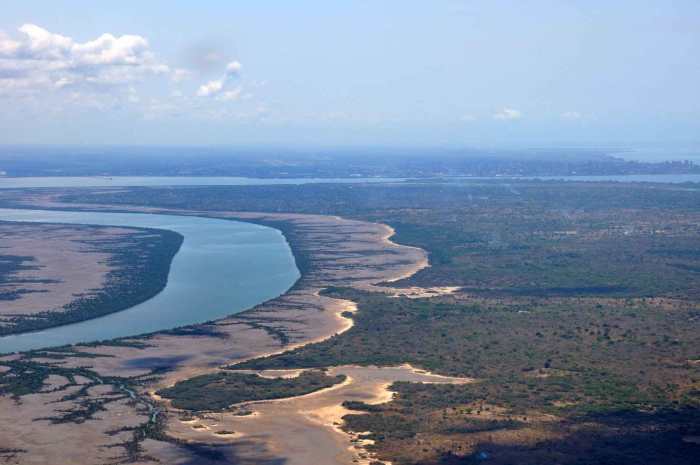
Tanzania is expected to gain significant environmental, economic and social benefits from a new US$7.12 million regional initiative aimed at improving the joint management of the Ruvuma River Basin and its coastal ecosystems, following the formal launch of the project involving Malawi, Mozambique and Tanzania in Dar es Salaam.
The five-year project, funded by the Global Environment Facility (GEF) and implemented by the International Union for Conservation of Nature (IUCN) in partnership with regional institutions, marks the first comprehensive effort to manage the 155,000-square-kilometre basin using a “source-to-sea” approach. This approach treats land, freshwater, coastal and marine ecosystems as one interconnected system to ensure sustainable use of natural resources.
For Tanzania, which accounts for about 52,000 square kilometres (34 percent) of the basin, the initiative presents an opportunity to strengthen the management of water resources that support communities, agriculture, fisheries and other economic activities in the southern part of the country.
Through the project, Tanzania will benefit from improved data collection and scientific research on water resources, ecosystems and climate trends within the basin. The availability of reliable data is expected to enhance planning and decision-making for sustainable development in the Ruvuma and Southern Coast areas.
The initiative will also support climate resilience efforts, helping communities adapt to increasingly unpredictable rainfall patterns and extreme weather events associated with climate change. Strengthening ecosystem protection within the basin is expected to safeguard biodiversity and improve the long-term sustainability of natural resources that many Tanzanian communities depend on for their livelihoods.
In addition, the project places strong emphasis on community participation, ensuring that local populations along the Ruvuma River are actively involved in decisions related to water use, conservation and development.
This approach is expected to improve sustainable livelihood opportunities, including agriculture, fisheries and eco-tourism activities linked to healthy ecosystems.
Another key benefit for Tanzania lies in strengthening regional cooperation. By working closely with Malawi and Mozambique through transboundary coordination mechanisms, Tanzania will be better positioned to address environmental challenges that cannot be solved by one country alone, such as pollution, deforestation and unsustainable land use practices affecting the river system.
The initiative has attracted substantial financial backing. While the GEF grant totals US$7.12 million, participating countries and development partners have committed co-financing of about US$65.49 million, bringing the total investment in the basin to over US$72 million during the project’s five-year implementation period ending in December 2030.
Experts say the project could also help Tanzania strengthen institutional capacity in water governance and ecosystem management, while aligning with broader national priorities on climate change adaptation, environmental conservation and sustainable resource management.
Beyond its immediate benefits, the Ruvuma River Basin initiative could become an important model for managing shared water resources across Africa.
With more than 60 transboundary river basins on the continent, collaborative approaches such as this one are increasingly seen as essential to ensuring water security, environmental protection and sustainable development in the face of climate change. For Tanzania, participation in the initiative signals a major step toward protecting one of its most important shared rivers while securing long-term benefits for communities and ecosystems that depend on the Ruvuma Basin.