By Costantine Muganyizi
For years, Tanzania’s mining industry has been defined by promise – rich geology, new discoveries, and rising investor interest. Today, that narrative is changing.
The sector is entering a more decisive phase where success will depend less on what lies underground and more on what happens above it: infrastructure, financing, and the ability to execute projects efficiently.
Mining’s contribution to the national economy already tells a story of growth. The sector now accounts for about 10 percent of GDP, up from roughly four percent in 2007, and has become Tanzania’s second-largest foreign exchange earner after tourism.
Gold continues to anchor the sector, with major producers maintaining robust production levels through 2025. By the third quarter of last year alone, leading miners had delivered a combined output of about 335,000 ounces.
The next chapter
Yet, according to industry leaders, the bigger story is not how much gold is found, but how effectively projects are delivered. The next chapter, they argue, will be shaped by execution rather than discovery.
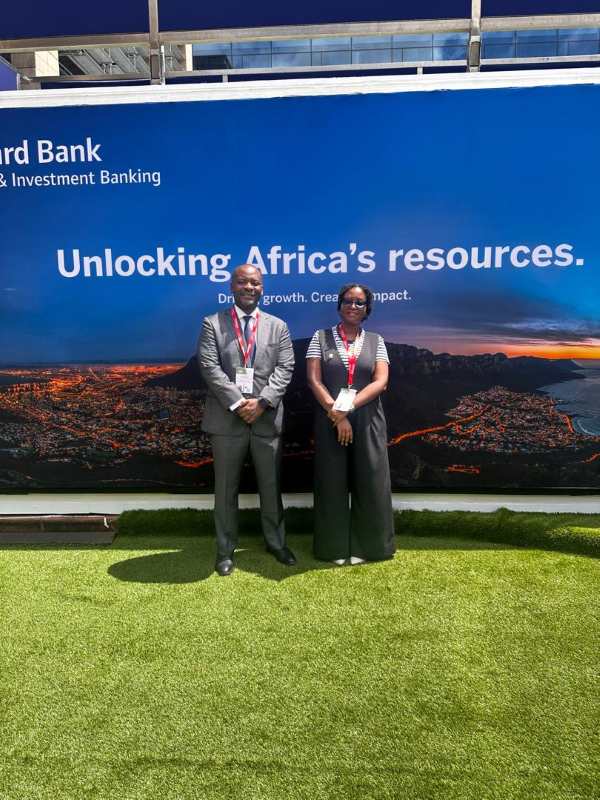
Signals from Stanbic Bank Tanzania (SBT) and discussions at Mining Indaba 2026 in Cape Town suggest that global investors are rethinking how they assess mining jurisdictions.
The question is no longer simply whether a country has mineral resources. It is whether projects can be built on time, run efficiently, and supported by strong infrastructure and financing.
For Tanzania, this moment represents both validation of past reforms and a test of future performance.
From opportunity to delivery
In the past, many African mining markets competed by showcasing untapped potential. Exploration upside and frontier opportunities attracted capital willing to take risks.
Today’s environment is more disciplined.
Investors want predictability, efficiency, and evidence that projects can move from feasibility studies to steady production.
That shift places execution at the centre of Tanzania’s mining outlook. Over recent years, the country has introduced regulatory improvements, clearer licensing processes, and stronger public–private engagement. These steps have helped improve transparency and investor confidence.
But policy reform alone is not enough. The real differentiator now is whether projects are delivered efficiently and sustainably. Investors are increasingly comparing jurisdictions on their track record of implementation, not just their policy frameworks.
As Elias Ngunangwa, Head of Client Coverage for Corporate and Investment Banking at SBT, puts it: “The conversation around mining has evolved. The focus today is on whether projects can be delivered efficiently, supported by the right infrastructure, financing structures and operating environment.”
That evolution mirrors a global trend. Mining capital has become more selective, and competition among jurisdictions is intensifying. Countries that reduce uncertainty and demonstrate delivery capacity are more likely to attract long-term investment.
Infrastructure and energy as competitive edges
A major theme in Tanzania’s mining transition is the rising importance of infrastructure and energy. These factors are no longer background issues; they are central to project viability.
Investments in transport corridors – roads and rail links – are improving the movement of minerals, equipment, and supplies. Efficient logistics reduce delays, control costs, and increase reliability. For investors, that translates directly into lower risk.
Energy reliability is equally crucial. Mining is energy-intensive, and dependence on diesel generation has historically exposed operations to high and volatile costs. Increased connection to the national grid is helping stabilise operating expenses and improve planning certainty.
Mr. Ngunangwa underscores this shift: “Infrastructure and power are no longer background considerations. They directly affect timelines, costs and the ability of mining projects to move from development into steady production.”
The implications go beyond mining. Infrastructure built for the sector often benefits other industries and communities, supporting broader economic development. In that sense, mining can act as a catalyst for national infrastructure expansion.
Financing the full mining value chain
Another sign of sector maturity is how financing is evolving. Mining finance is no longer limited to large project loans for mine construction. Increasingly, attention is turning to the entire mining ecosystem.
Edgar Mwasha, Vice President for Diversified Industries at Stanbic, argues that this broader view is essential for sustainability.
“Mining functions as an ecosystem. Beyond extraction, there are suppliers, contractors, logistics providers and service companies that need access to capital to keep operations running smoothly. Financing needs to support that full chain if growth is to be sustained.”
This ecosystem approach creates stronger local linkages. When local suppliers and service providers can access working capital and trade finance, they are better able to participate in mining value chains. That increases domestic value addition and spreads economic benefits more widely.
It also reduces operational fragility. A well-financed supply chain is less likely to suffer disruptions that can delay production or increase costs.
Diversification and critical minerals
While gold remains the backbone of Tanzania’s mining output, the sector is gradually diversifying into critical minerals such as graphite and nickel.
These minerals are essential for batteries and clean energy technologies, linking Tanzania to global energy transition supply chains.
New investors have entered the market in recent years, supported by strategic licences aimed at accelerating exploration and development. This diversification broadens the sector’s opportunity base but also raises expectations.
Critical mineral investors often apply stricter standards on governance, environmental management, and supply chain transparency. They look for jurisdictions that can support long-term, responsible production.
Mr. Mwasha notes the importance of readiness in this context: “As global supply chains evolve, readiness matters. Projects that demonstrate strength in infrastructure, energy and governance are better positioned to attract long term capital.”
The execution test
Ultimately, Tanzania’s mining trajectory will hinge on alignment – between capital, infrastructure, and implementation capacity. The pieces are increasingly in place, but their coordination will determine outcomes.
Esther Manase, Head of Corporate and Investment Banking at Stanbic, captures this turning point:
“Tanzania has built a solid foundation for mining growth. The next phase is about execution – aligning investment, infrastructure and financing in a way that supports long term value creation across the sector.”
That alignment is what turns potential into performance. It is also what reassures investors that projects will deliver returns over decades, not just years.
A maturing mining jurisdiction
Tanzania is increasingly seen not as a frontier market but as a maturing mining jurisdiction. That status brings credibility, but also higher expectations. Investors will judge the sector on reliability, consistency, and sustainability.

The fundamentals are encouraging: rising output, growing diversification, improving infrastructure, and more sophisticated financing. Yet the global mining landscape is competitive, and capital flows to jurisdictions that prove they can deliver.
The county’s mining sector stands at a crossroads. The era of highlighting potential is fading. The era of demonstrating performance has begun.
If execution matches ambition, mining could play an even larger role in the country’s long-term economic transformation. If not, opportunities may shift elsewhere. For now, the message from industry leaders is clear: Tanzania has built the foundation. What matters next is how effectively it builds on it.