
By Business Insider Reporter, Tanga
The Prime Minister, Dr. Mwigulu Nchemba, has reaffirmed the government’s commitment to completing the US$5.65 billion East African crude oil pipeline, describing the project as both a symbol of regional integration and proof of the country’s capacity to deliver complex, large-scale infrastructure.
Dr. Nchemba inspected construction works on the cross-border pipeline linking Hoima in Uganda to Chongoleani in Tanzania’s Tanga Region.
The 1,443-kilometre export route, known as the East African Crude Oil Pipeline (EACOP), is one of the largest energy infrastructure investments currently under development in sub-Saharan Africa.
Speaking during his visit, Dr. Nchemba expressed satisfaction with the progress of the project, which has reached 81 per cent completion and is scheduled for commissioning in July 2026.
“This is a strategic project costing US$5.65 billion and a clear testament to the strong brotherly ties between Tanzania and Uganda,” he said, acknowledging the political backing of Samia Suluhu Hassan and Yoweri Kaguta Museveni in driving its implementation.
A strategic regional asset
The heated pipeline will transport crude oil from Uganda’s Lake Albert oilfields to the Tanzanian port of Tanga for export to international markets.
Tanzania holds a 15 percent stake in the project through the government, alongside Uganda and international oil companies.
For Tanzania, EACOP represents more than transit fees. The project is expected to catalyse industrial activity in Tanga, expand port infrastructure, create jobs and stimulate demand in construction, logistics, insurance and financial services.
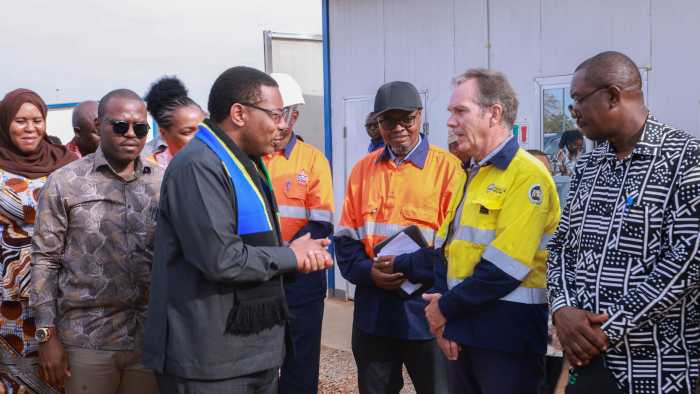
The Prime Minister stressed that Tanzania’s role in delivering the project reinforces its growing reputation as a reliable host for strategic regional investments.
“We will continue to give this project the priority it deserves – not only in honour of our regional partnership, but also to demonstrate that Tanzania is capable of independently executing major strategic development projects,” he said.
Crackdown on ‘fronting’ in local content
In a pointed warning to investors, Dr. Nchemba cautioned against the practice of foreign firms establishing companies under the guise of Tanzanian ownership in order to benefit from local content provisions.
Under EACOP’s local content framework, Tanzanian businesses are guaranteed participation in designated portions of procurement and service contracts. However, authorities say some foreign operators are allegedly using Tanzanian nominees as fronts while retaining effective control and profits.
“We want to uplift genuine Tanzanian companies,” the Prime Minister said. “If anyone is found using locals as a cover to access opportunities meant for Tanzanians, they will be banned and will not operate in this country again.”
He described such practices as fraudulent and detrimental to national economic empowerment, adding that officials tasked with oversight would also face consequences if they colluded in circumventing regulations.
Employment and skills transfer
Dr. Nchemba further directed project supervisors to prioritise employment opportunities for workers who have already participated in the construction phase once the pipeline becomes operational, provided they meet the required qualifications.
Deputy Minister for Energy, Salome Makamba, confirmed that construction began in 2022 and remains on track for completion in mid-2026.
Broader economic implications
The pipeline comes at a time when East Africa is seeking to monetise newly discovered hydrocarbon reserves while balancing energy transition pressures and environmental scrutiny from international stakeholders.
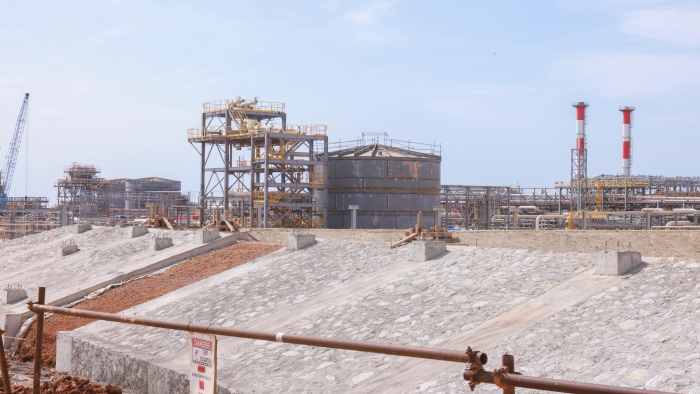
Despite activism and financing challenges during its early stages, EACOP has secured the political and financial backing needed to proceed.
For Tanzania, successful completion could strengthen its role as a regional energy corridor, boost foreign direct investment confidence and expand fiscal revenues through transit fees and associated economic activity. As construction nears completion, the focus is shifting towards operational readiness, regulatory compliance and ensuring that the promised local economic benefits – particularly for Tanzanian firms – are fully realised.