By Business Insider Reporter
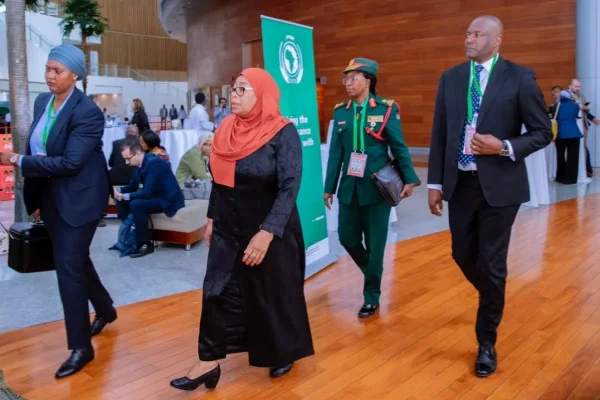
President Dr. Samia Suluhu Hassan has been formally appointed as the African Union (AU) Champion for Maternal and Child Health, as well as Sexual and Reproductive Health and Rights (SRHR).
A statement released by the Director of Presidential Communication at State House, Bakari Machumu, said her appointment was endorsed at the 39th Ordinary Session of the Assembly of Heads of State and Government of the African Union, following recommendations contained in the 2025 report of the Committee of Heads of State and Government overseeing the Africa Centres for Disease Control and Prevention (Africa CDC). President Samia will serve in the role for a one-year term.
Driving a continental health priority
As AU Champion, President Samia will coordinate and mobilise efforts among member states to reduce maternal and child mortality, strengthen healthcare systems and advance reproductive health rights across the continent.
Maternal and neonatal mortality remain among Africa’s most pressing public health challenges. According to continental health data, sub-Saharan Africa accounts for the majority of global maternal deaths, with limited access to skilled birth attendance, emergency obstetric care and reproductive health services continuing to strain national systems.
Her appointment places Tanzania at the centre of continental health diplomacy at a time when African governments are seeking to rebuild and strengthen health systems following the COVID-19 pandemic and other public health emergencies.
Recognition of Tanzania’s progress
The AU’s decision reflects recognition of Tanzania’s progress in expanding maternal and child health services in recent years.
The country has increased investments in primary healthcare facilities, trained additional skilled birth attendants and expanded immunisation and reproductive health outreach programmes.
Tanzania has also prioritised universal health coverage reforms and digital health systems aimed at improving service delivery, particularly in rural areas where maternal mortality risks remain highest.
By elevating President Samia to this continental role, the AU signals confidence in Tanzania’s policy direction and implementation record in social sector development.
Health as an economic foundation
Beyond its humanitarian dimension, the appointment carries wider economic implications. Health outcomes are increasingly viewed as a foundation for productivity, workforce participation and long-term growth. High maternal and infant mortality rates impose significant social and economic costs, including reduced labour force participation and increased public health expenditure.
Strengthening maternal and child health systems contributes to improved human capital development – a critical factor in Africa’s industrialisation and demographic transition strategies.
For development partners and investors, leadership in health governance also enhances a country’s profile in attracting concessional financing, global health partnerships and technical cooperation.
Expanding Africa CDC’s mandate
The appointment follows deliberations under the Africa CDC framework, which has expanded its mandate in recent years to include broader health system strengthening beyond epidemic preparedness.
By linking maternal and reproductive health to continental health security structures, the AU is signalling a more integrated approach to public health governance – combining emergency response capacity with long-term system resilience.
A continental leadership moment
President Samia’s new role reinforces Tanzania’s growing visibility within continental institutions. In recent years, she has taken on high-profile responsibilities in areas including clean cooking energy and climate diplomacy.
The AU Champion designation adds maternal and reproductive health leadership to that portfolio.
As she assumes the one-year mandate, the focus will shift to translating continental commitments into measurable outcomes, including policy harmonisation, financing mobilisation and cross-border collaboration in healthcare delivery. The appointment not only highlights Africa’s determination to confront persistent health inequities but also underscores the central role of leadership in advancing inclusive social and economic development across the continent.