By Business Insider Reporter
At a time when Tanzania is recalibrating its growth model to balance economic ambition with environmental stewardship, the International Union for Conservation of Nature (IUCN) in Tanzania and the Ministry of Natural Resources and Tourism (MNRT) have taken a decisive step to deepen their strategic partnership.
A high-level bilateral meeting between the two institutions signalled a shift from broad commitments to action-oriented collaboration, aimed at translating conservation priorities into tangible economic and social returns.
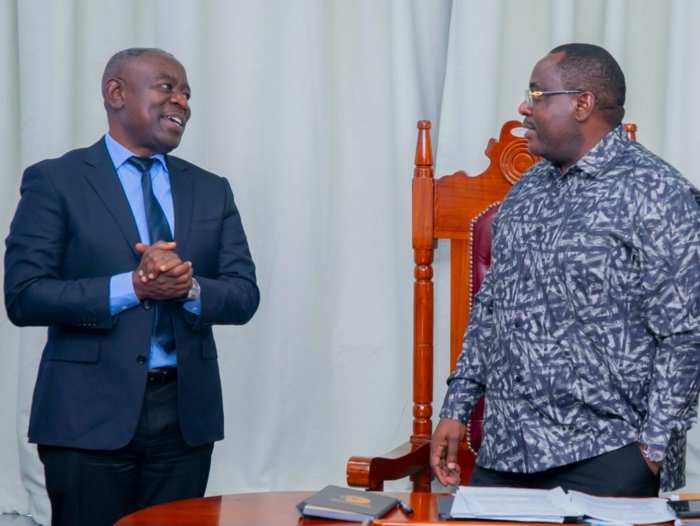
Led by MNRT Permanent Secretary Dr Hassan Abbas, the meeting focused on accelerating the implementation of a recently signed Memorandum of Understanding (MoU), ensuring it aligns closely with Tanzania’s national development agenda.
The discussions went beyond policy intent, homing in on practical interventions in biodiversity conservation, sustainable tourism, and the management of human–wildlife conflict – an issue that increasingly sits at the intersection of conservation, community livelihoods, and political accountability.
For Tanzania, where tourism remains one of the strongest contributors to foreign exchange earnings and employment, the stakes are high.
Protected areas, wildlife corridors, and forest landscapes are not only ecological assets but also economic ones. Dr Abbas emphasised the government’s political commitment to conservation, while underscoring the need for solutions that work on the ground – approaches that protect ecosystems while also addressing the needs of communities living alongside wildlife.
He also highlighted the growing role of the private sector in conservation finance, signalling openness to partnerships that can unlock investment and innovation.
IUCN’s Regional Programme Coordinator and Country Representative for Tanzania, Mr. Charles Oluchina, reaffirmed the organisation’s long-term commitment to working with the government to deliver results that matter. He stressed that conservation outcomes are strongest when institutions move in step – through coordinated planning, shared accountability, and sustained dialogue.
In Tanzania’s case, he noted, this coordination is essential to ensure conservation supports inclusive growth rather than competing with it.
One of the most concrete outcomes of the meeting was the agreement to establish both a Steering Committee and a Technical Committee to oversee implementation of the MoU. Backed by a clear roadmap, these structures are expected to improve coordination, track progress, and ensure accountability – an area where many well-intentioned partnerships have previously faltered.
The renewed engagement builds on decades of collaboration between IUCN and institutions under MNRT. Tanzania National Parks Authority (TANAPA), an IUCN member since the authority’s formative years in the 1950s, has worked closely with the organisation to advance global conservation frameworks at the national level. Other agencies, including the Tanzania Wildlife Authority (TAWA), Tanzania Wildlife Research Institute (TAWIRI), and Tanzania Forestry Service (TFS), have also partnered with IUCN on a range of mission-aligned initiatives.
In the forestry sector, IUCN has played a particularly strategic role. Working with TFS, the organisation has supported the development and implementation of Tanzania’s Forest Landscape Restoration (FLR) strategy, providing technical guidance and applying the Restoration Opportunities Assessment Methodology (ROAM). Through international platforms such as the Bonn Challenge and AFR100, IUCN has helped Tanzania position itself within global restoration efforts, while mobilising partnerships to meet national restoration targets.
The timing of this latest engagement is significant. As Tanzania seeks to strengthen sustainable tourism, attract climate finance, and meet its environmental commitments, closer alignment between policy, science, and implementation is increasingly critical. The meeting effectively tied together years of collaboration, setting the stage for more coordinated action that links conservation outcomes to economic resilience. For a country whose natural capital underpins both its global brand and domestic livelihoods, the deepening partnership between IUCN and MNRT is more than an institutional milestone. It reflects a growing recognition that conservation, when strategically managed, can be a powerful driver of sustainable tourism, private investment, and long-term national growth.