By Business Insider Correspondent, Arusha
The Government has commended the Institute of Accountancy Arusha (IAA) for its leadership in digital transformation, research and institutional reform, describing the institution as a strategic pillar in Tanzania’s long-term development agenda under National Development Vision 2025–2050 (Dira 2050).
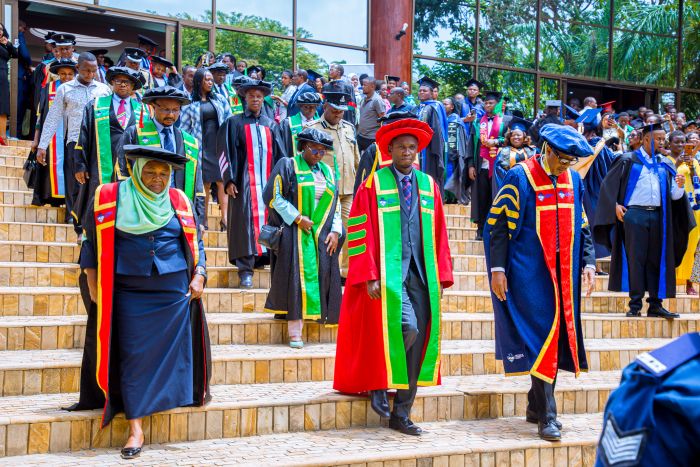
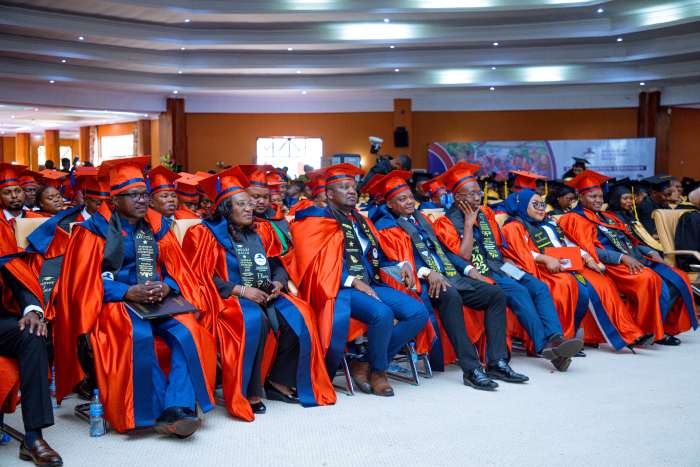
The commendation was delivered by the Deputy Minister for Finance, Mr. Laurent Luswetula, on behalf of the Minister for Finance, Ambassador Khamis Mussa Omar, during the 27th graduation ceremony of IAA, held at Ngurdoto Hotel in Arusha.
Addressing graduates, academics and invited guests, Mr. Luswetula said IAA’s sustained investments in digital systems, applied research, professional consultancy and academic reforms are among the key drivers required to support Tanzania’s transition towards a modern, competitive and knowledge-based economy.
Building human capital for a modern economy
Mr. Luswetula noted that IAA has continued to make a significant contribution to the national economy by producing professionals in critical fields such as accountancy, finance, economics, taxation, tourism, business management, banking, procurement and supply chain management, marketing, insurance and information and communication technology (ICT).
“These professionals form the backbone of government revenue mobilisation, public financial management, private sector development, financial institutions and national development projects,” he said.
He added that through its graduates, IAA has played a tangible role in strengthening accountability, transparency and financial discipline across both the public and private sectors.
“I congratulate IAA for consistently demonstrating high competence in preparing skilled human resources who meet labour market needs and contribute meaningfully to the development of our national economy,” Mr. Luswetula said.
Digital transformation as a growth catalyst
The Deputy Minister further praised IAA for its leadership in modernising teaching and learning systems through the adoption of advanced digital technologies, alongside strengthening research and professional advisory services.
“Digital transformation is a critical catalyst for development, particularly in accelerating economic growth and improving social services such as education,” he said.
“The Government recognises and applauds IAA’s investment in digital systems that enhance efficiency and innovation in the delivery of higher education.”
Research with national impact
Mr. Luswetula also urged postgraduate students and graduates to ensure their academic research directly addresses Tanzania’s real and pressing challenges, including public financial management, inclusive economic growth, employment creation, innovation and the effective use of technology.
“Your research should serve as a catalyst for sound policies, informed decision-making and sustainable development for our people and our nation,” he emphasised.
He reaffirmed that the government, under the leadership of President Samia Suluhu Hassan, remains committed to creating an enabling environment for inclusive economic growth that benefits all Tanzanians. He stressed that sectors such as finance, accounting, economics, banking, business and project management are essential to ensuring national resources are mobilised, planned, utilised and controlled efficiently, transparently and accountably.
The Ministry of Finance, he added, will continue to encourage and support higher learning institutions aligned with the national vision of building a knowledge- and skills-driven economy, including through policy and financial frameworks that strengthen strategic programmes and impactful research.
IAA strengthens academic excellence
Speaking at the event, Dr Mwamini Tulli, Chairperson of the IAA Governing Council, said the institution is firmly committed to producing highly competent graduates by investing in qualified academic staff with strong academic and professional credentials, as well as promoting participatory teaching and learning approaches.
“IAA has distinguished itself as an institution that produces innovative graduates capable of analysing and solving challenges within their workplaces, communities and the nation at large,” Dr Tulli said.
He noted that IAA’s Master’s graduates are widely recognised for their academic quality, professional ethics and technical competence, attributes underpinned by curricula that respond to labour market needs, technological advancement and socio-economic change.
Responding to labour market dynamics
IAA Rector, Professor Eliamani Sedoyeka, said the institution continues to strengthen teaching and learning services in response to rapid changes in labour market demands and national leadership priorities under Vision 2025–2050.
As part of this strategy, IAA has significantly expanded its academic capacity. During the 2025/2026 academic year, a total of 115 lecturers were sponsored to pursue doctoral (PhD) studies at universities within and outside Tanzania. “This strategy aims to maintain an appropriate student-to-lecturer ratio, strengthen research supervision and enhance IAA’s capacity to produce professionals who meet both national and international standards,” Prof. Sedoyeka said.