By Business Insider Reporter
At a time when Africa is navigating rapid demographic growth, accelerating digital adoption, and renewed global competition for capital, the continent’s leaders are sharpening a clear and consistent message: Africa’s transformation will be driven by investment – not aid.
That message resonated strongly at the World Governments Summit (WGS) 2026, where political leaders and financial heavyweights from across the continent gathered to discuss how Africa can unlock private capital at a pivotal moment in its economic evolution.
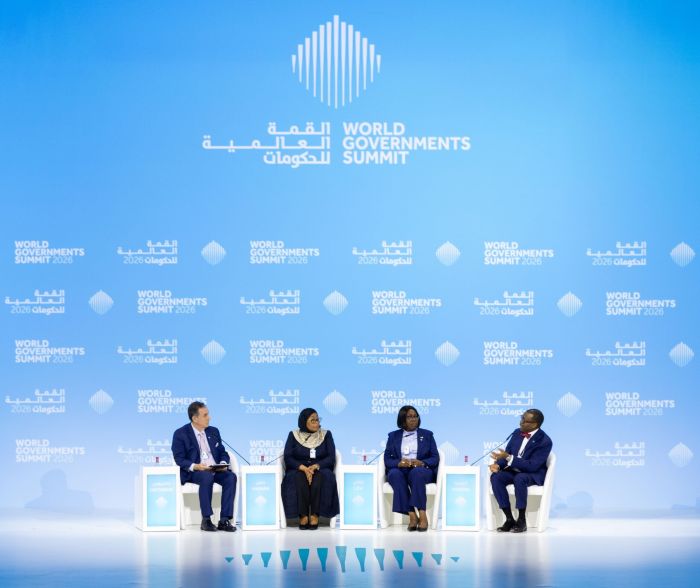
Speaking during a high-level session titled “Government and the Future of Investment: An African Perspective”, Tanzania’s President Samia Suluhu Hassan, Mozambique’s Prime Minister Maria Benvinda Delfina Levi, and African Development Bank (AfDB) Group President Dr. Akinwumi Adesina made the case for repositioning Africa as a competitive, long-term investment destination.
Moderated by veteran journalist and APCO Worldwide strategic adviser John Defterios, the discussion framed Africa as standing at a historic inflection point – rich in opportunity, yet still undercapitalised.
An underinvested continent at a turning point
Defterios set the tone with a stark contrast. Despite its vast natural resources, youthful population, expanding tourism sector and fast-growing digital economy, Africa continues to receive only a fraction of global investment flows.
“Of the US$1.6 trillion in global foreign direct investment recorded in 2025, only about US$60 billion – roughly 4 to 5 percent – came to Africa,” he noted, describing the gap as one of the continent’s most persistent structural challenges.
For Dr Adesina, that imbalance underscores the urgency of moving beyond aid-led development models.
“Africa does not need aid; it needs investment,” he said. “And the data increasingly supports that shift.”
Citing International Monetary Fund projections, Adesina noted that Africa is expected to grow at around 4 percent annually over the next several years – placing it among the fastest-growing regions globally.
“This is not a temporary blip,” he said. “This is structural momentum.”
Making the investment case
Adesina argued that Africa’s investment proposition is already stronger than many global investors assume. He pointed to profitable multinational corporations operating across the continent, resilient returns from infrastructure assets, and Africa’s relatively low correlation with global public markets – an increasingly attractive feature in a volatile world.
He also highlighted the continent’s estimated US$6 trillion worth of critical minerals and natural assets, particularly at a time when global supply chains for energy transition minerals are being reconfigured.
“The issue is not the absence of assets,” Adesina said. “The issue is how we structure those assets into bankable, investable opportunities.”
That task, he added, will require stronger project preparation, blended finance, guarantees, and the catalytic role of development finance institutions.
Tanzania’s reform-led investment push
President Samia Suluhu Hassan used the platform to outline how Tanzania is translating that investment-first philosophy into policy action.
Since taking office, her administration has prioritised regulatory reforms, policy consistency, and large-scale infrastructure development as tools to restore investor confidence.
“These reforms have created a more predictable and attractive investment environment,” President Hassan said.
She cited flagship transport projects, including a 2,100-kilometre standard gauge railway linking Tanzania to Burundi and the Democratic Republic of Congo, as well as major port developments along the Indian Ocean coastline and inland lake corridors.
The results, she said, are already visible. Registered investment projects in Tanzania have increased from around 250 in 2018 to nearly 970 today, while total investment values have risen from US$3.8 billion to almost US$12 billion.
President Hassan also highlighted Tanzania’s close collaboration with multilateral lenders such as the African Development Bank and the World Bank, alongside new partners including the United Arab Emirates, in financing infrastructure and productive sectors.
Mozambique’s energy-led growth strategy
Mozambique’s Prime Minister Maria Benvinda Delfina Levi focused on her country’s experience in structuring complex, capital-intensive energy projects – often cited as a litmus test for investor confidence in frontier markets.
She pointed to the resumption of the Mozambique LNG project led by TotalEnergies, ExxonMobil’s Rovuma LNG development, ENI’s floating LNG platforms, and a new US$5 billion hydroelectric partnership involving EDF and Sumitomo.
“These projects show that Africa can host investments of global scale and complexity,” Levi said, adding that governance reforms and risk mitigation mechanisms are essential to sustaining momentum.
According to her, Africa’s central challenge lies in closing the gap between abundant assets and global capital markets through better project preparation, transparency, and policy stability.
From assets to portfolios
As the session drew to a close, Adesina returned to the broader continental vision – one in which Africa’s natural wealth, infrastructure pipeline, and demographic dividend are transformed into diversified, investable portfolios.
He emphasised the growing role of development banks, credit enhancement tools, and platforms such as the forthcoming Global Africa Investment Summit in mobilising private capital at scale.
“Africa is not optional; Africa is inevitable,” Adesina said. “The leadership across the continent is aligned on moving up value chains and positioning Africa as one of the world’s most attractive destinations for sustainable, long-term investment.” For global investors scanning for growth beyond saturated markets, the message from WGS 2026 was unmistakable: Africa is no longer asking for sympathy – it is making a business case.