By Business Insider Reporter, Dodoma
The Government has reaffirmed its recognition of the Global Environment Facility (GEF) as a critical partner in advancing the country’s environmental protection and climate resilience agenda, underscoring the fund’s contribution to sustainable development at a time of mounting ecological and economic pressures.
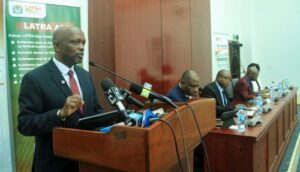
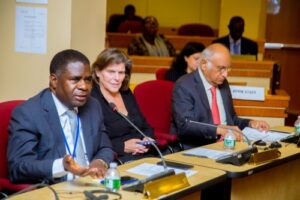
Speaking in Dodoma on January 30, 2026, the Permanent Secretary in the Vice President’s Office (Environment), Dr. Richard Muyungi (pictured above), said GEF-backed interventions have played a significant role in supporting national efforts to conserve natural resources, protect biodiversity and strengthen resilience to climate change.
Dr. Muyungi made the remarks during high-level discussions with GEF Implementing Agencies, noting that through technical expertise, financing and close collaboration with national institutions, GEF-supported programmes have delivered tangible environmental, social and economic benefits.
“Our partnership has enabled the country to make meaningful progress in addressing environmental challenges, including land degradation, biodiversity loss, the impacts of climate change and environmental pollution,” he said.
Environmental action as an economic imperative
Tanzania’s environmental agenda is increasingly viewed not only as a conservation priority, but also as a core economic issue. Agriculture, tourism, fisheries and energy – sectors that collectively underpin growth and employment – are all highly exposed to climate risks and environmental degradation.

Under President Samia Suluhu Hassan, Tanzania has intensified its focus on climate action, environmental governance and sustainable natural resource management.
This has included integrating climate resilience into national development planning, strengthening environmental regulations, and mobilising international climate finance.
Dr. Muyungi acknowledged that while notable gains have been achieved in recent years, the scale and complexity of environmental challenges continue to grow.
“Despite the progress recorded under the Sixth Phase Government, some challenges have intensified, increasing the need for greater financing, enhanced technical capacity and broader stakeholder engagement to achieve more transformative results,” he said.
Call for increased climate and environmental financing
The Permanent Secretary emphasised that the Government values the contribution of GEF and related funds, and is ready to deepen cooperation with development partners to mobilise resources commensurate with the scale of both national and global environmental challenges.
“As we move forward, Tanzania is prepared to work closely with partners to attract more resources aligned with our national priorities and international commitments on environmental conservation and climate change mitigation and adaptation,” Dr. Muyungi said.
He also urged Ministries, government institutions and GEF agencies to make better use of multiple platforms to showcase the successes achieved through GEF-supported projects. Greater visibility, he noted, would help build public support and strengthen the case for scaling up investment in environmental programmes.
Youth, green jobs and inclusive growth
A key focus of the discussions was the role of young people in driving Tanzania’s green transition. Dr Muyungi called on GEF stakeholders to expand youth participation in project implementation, tapping into their innovation, skills and energy.

“This is the right time to engage young people more actively in GEF projects so that we can harness their creativity while promoting environmental conservation, community wellbeing and the creation of green jobs,” he said.
With Tanzania’s population heavily skewed towards youth, policymakers increasingly see green growth as a pathway to employment creation, particularly in areas such as renewable energy, sustainable agriculture, conservation enterprises and climate-smart technologies.
Zanzibar seeks expanded support
The Government of Zanzibar echoed the call for enhanced GEF support. Ms. Farhat Mbarouk, Director of the Department of Environment in the Office of the First Vice President of Zanzibar, praised GEF for its continued cooperation, noting that projects implemented on the Isles have been instrumental in strengthening conservation efforts while enabling communities to earn income through environmentally friendly economic activities.
She said the Revolutionary Government of Zanzibar has been implementing a range of initiatives to address climate change, including public education on environmental conservation and sustainable resource use.

Ms. Mbarouk stressed the need for increased GEF financing for Zanzibar to unlock additional projects aimed at environmental protection and boosting climate resilience across communities and key economic sectors.
“Scaling up GEF support in Zanzibar would help expand conservation initiatives while strengthening resilience to climate change for both communities and growth-oriented sectors of the economy,” she said.
Strategic partner in a changing climate landscape
Globally, the GEF remains one of the largest multilateral sources of financing for biodiversity, climate change mitigation and adaptation, land degradation and international waters. For Tanzania, continued engagement with the facility is increasingly strategic as the country balances economic growth ambitions with the urgent need to safeguard its natural capital. As climate risks intensify and global competition for climate finance grows, Tanzania’s push for deeper collaboration with GEF signals a clear message: environmental sustainability is no longer peripheral to development – it is central to the country’s long-term economic resilience and prosperity.