By Business Insider Correspondent, Nairobi
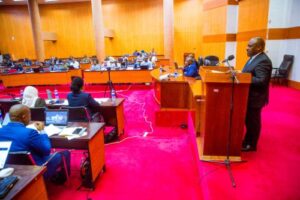
Leaders and environmental experts from across East and Southern Africa have gathered in Nairobi this week with a single, urgent mission: ensuring that ambitious promises to restore the region’s lands and waters are backed by hard facts and real action.
The high-level weeklong workshop, focuses on Target 2 of the Kunming-Montreal Global Biodiversity Framework. This global goal demands that at least 30 per cent of degraded terrestrial, inland water, and coastal and marine ecosystems be under effective restoration by the year 2030.
Turning promises into reality
Kenya’s Cabinet Secretary for the Ministry of Environment, Climate Change and Forestry, Dr. Deborah Mulongo Barasa, opened the session by warning that the world is watching to see if these commitments remain “promises on paper” or become a reality.
“Restoration is about giving nature a chance to recover and in doing so, protecting livelihoods, securing water, supporting food production, and building resilience to climate change,” Dr. Barasa told delegates.
She emphasised that while restoring ecosystems is vital, the region must implement credible monitoring and reporting systems to prove that the work is actually being done and to learn from past mistakes.
A shared responsibility
The challenge is significant for a region where communities depend directly on nature for survival.
Patrick Mucheleka, Chairperson of the RCMRD Governing Council and Permanent Secretary from Zambia, noted that while every country has a unique context, the struggle for reliable data and technical capacity is a shared hurdle.

“Across our region, we all face similar challenges – land under pressure, ecosystems that are stretched,” Mucheleka explained, calling for subregional cooperation to turn the tide.
A new technical powerhouse for the region
A major milestone of the workshop was the official launch of the Regional Centre for Mapping of Resources for Development (RCMRD) as a Subregional Technical and Scientific Cooperation Support Centre.
In this new role, the RCMRD will provide 11 countries—including Kenya, Uganda, Tanzania, Rwanda, Ethiopia, and Somalia—with the scientific tools and data-driven support needed to hit their 2030 restoration targets.
Who is involved?
The initiative is a massive collaborative effort involving several major global and regional players:
Convenors: The Food and Agriculture Organization of the United Nations (FAO), the RCMRD, and the Secretariat of the Convention on Biological Diversity (CBD).
Technical Support: The Society for Ecosystem Restoration (SER) and CIFOR-ICRAF.
Participating Nations: Comoros, Eswatini, Ethiopia, Kenya, Madagascar, Rwanda, Somalia, South Sudan, Uganda, United Republic of Tanzania, and Zambia.
Inclusive Voices: The workshop also includes representatives from women’s groups, youth, and indigenous peoples to ensure a “whole-of-society” approach. Through initiatives like AIM4NatuRe, the FAO is helping these regional centres become the primary “entry points” for countries to get the help they need to monitor and report on the health of their natural environments.