By Business Insider Reporter
When Italian Prime Minister Giorgia Meloni unveiled the Mattei Plan for Africa, she called it “a new pact among free nations” – one that treats African countries as equal partners rather than aid recipients.
Two years later, that vision is taking concrete shape across East Africa, where Italy is ramping up investment in energy, infrastructure, education, and agriculture – and Tanzania is emerging as one of its key partners.
Italy’s strategy in Africa is not just about diplomacy – it’s about redefining Europe’s role on the continent. As traditional powers like France retreat and new players such as China, India, and the Gulf states dominate, Rome is positioning itself as a pragmatic and reliable partner focused on long-term cooperation rather than short-term extraction.
“This is not charity; it’s co-development,” Ms. Meloni said during the Italy-Africa Summit in Rome earlier this year. “We want to build opportunities that make migration a choice, not a necessity.”
The Mattei Plan: Italy’s blueprint for equal partnership
The Mattei Plan for Africa – named after Enrico Mattei, the visionary founder of energy giant Eni – rests on six pillars: energy, infrastructure, water, agriculture, education and training and health. Its philosophy is simple but transformative: invest in Africa’s growth to secure Europe’s stability and prosperity.
In contrast to the EU’s bureaucratic Global Gateway initiative, the Mattei Plan is leaner and more flexible – “do less, but do it better,” as Meloni likes to put it. Italy has already used the plan to deepen energy cooperation with North African countries like Algeria, Egypt and Tunisia, while expanding southward into Mozambique, Kenya, Ethiopia, and Tanzania.
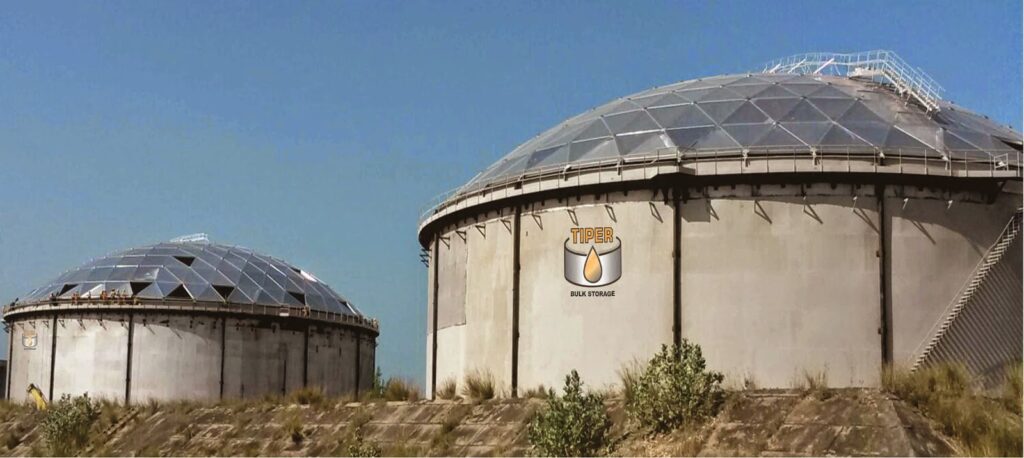
Tanzania, in particular, stands to benefit from Italy’s renewed engagement. The country’s strategic location along the Indian Ocean, its abundant natural gas reserves, and its growing role in regional logistics make it an ideal partner for Italian investors.
Tanzania and Italy: Old ties, new ambitions
Relations between Dar es Salaam and Rome date back to the early post-independence years, but Italian economic activity in Tanzania has historically been limited to energy and development cooperation. Now, under the Mattei framework, that relationship is being redefined.
Italian energy giant Eni, already a major player in Mozambique’s Ruvuma Basin, is quietly exploring opportunities to extend its regional operations along Tanzania’s southern corridor. Sources close to the company indicate growing interest in participating in Tanzania’s liquefied natural gas (LNG) projects and offshore exploration, particularly as the government accelerates the long-delayed LNG plant at Lindi.
“Tanzania is strategically important for Italy’s goal of becoming a European energy hub,” says an energy analyst based in Milan. “It’s about building diversified, reliable supply routes from East Africa to Europe.”
Beyond energy, Italian construction and engineering firms such as Webuild Group (formerly Salini Impregilo) – known for landmark projects across Africa – have also shown interest in Tanzania’s transport and water infrastructure. The company is already involved in hydropower and dam projects in neighboring Ethiopia and Uganda and has participated in feasibility studies for regional interconnections that could eventually benefit Tanzania’s power grid.
Meanwhile, smaller Italian firms are quietly investing in Tanzania’s agro-industrial and tourism sectors, bringing technology for irrigation, food processing, and hospitality development.
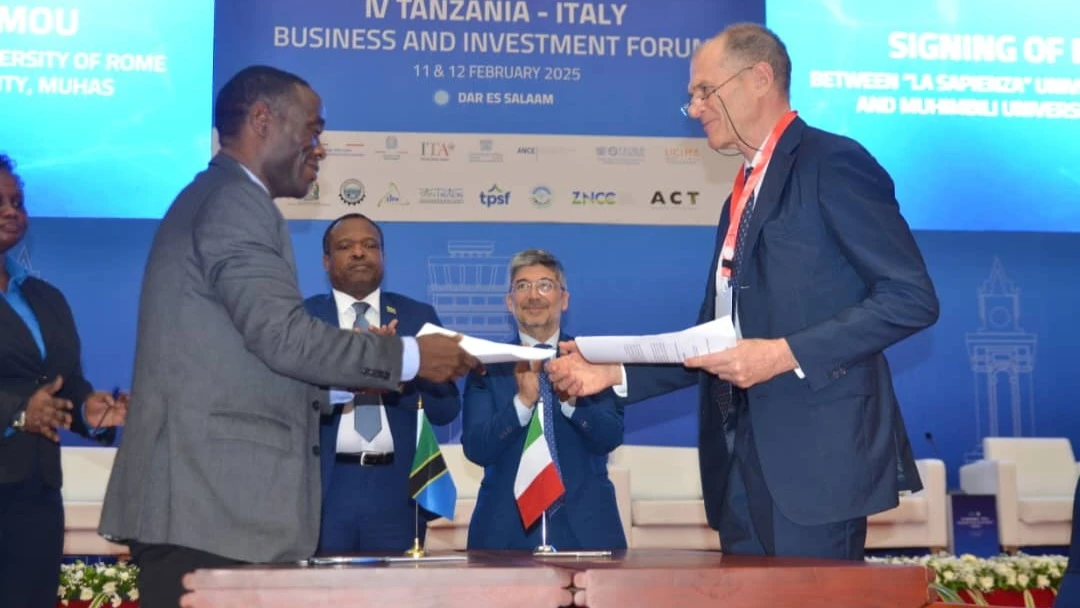
The Italian Trade Agency (ITA) and Tanzania Investment Centre (TIC) have held multiple business forums since 2023 aimed at linking Italian SMEs with Tanzanian counterparts.
Energy and infrastructure drive the East Africa strategy
Italy’s broader East Africa strategy hinges on energy security, regional integration, and connectivity. The Blue-Raman Submarine Cable Project, co-financed by the European Commission and implemented by Telecom Italia Sparkle, will soon link Europe to India via the Mediterranean and Eastern Africa, landing in Kenya and Tanzania.
This high-capacity digital corridor is expected to enhance data traffic, lower costs, and improve internet reliability across the region – a major boost for East Africa’s growing digital economy.
Additionally, Rome’s cooperation with Kenya and Ethiopia under the Mattei Plan has opened new opportunities for regional power interconnections and green energy investments, especially in geothermal and solar power. Italian development cooperation agency AICS has supported Tanzania’s rural electrification programs, training local engineers and funding community-based renewable projects.

A shift from aid to investment
Unlike past European initiatives that tied development funding to political reforms or governance conditions, Italy’s model focuses on mutual economic benefit. African countries gain access to technology, capital, and expertise; Italy secures stable energy supplies, new markets, and stronger migration partnerships.
In Tanzania’s case, this shift dovetails with President Samia Suluhu Hassan’s pro-investment agenda, which prioritizes infrastructure modernization, industrialization, and strategic partnerships with credible investors.
Italian companies have been among the early adopters of Tanzania’s new Public-Private Partnership (PPP) framework, exploring opportunities in renewable energy, logistics, and water management. The Italian Development Cooperation has also funded training programs at Ardhi University and Nelson Mandela African Institution of Science and Technology to build local capacity in sustainable construction and climate adaptation.
Challenges and opportunities ahead
Despite the promising outlook, Italy’s Africa engagement is not without challenges. The Mattei Plan’s centralization – run directly from the Prime Minister’s office – raises questions about continuity if political leadership changes in Rome. Moreover, competition with France, China, and the Gulf states could complicate Italy’s positioning in Africa’s crowded investment landscape. Still, Tanzania’s neutral diplomatic stance, growing economy, and strategic location make it a natural anchor for Italy’s East African ambitions. As European powers seek to rebuild trust in Africa, Italy’s blend of economic realism and partnership diplomacy offers a refreshing alternative.