
By Business Insider Reporter
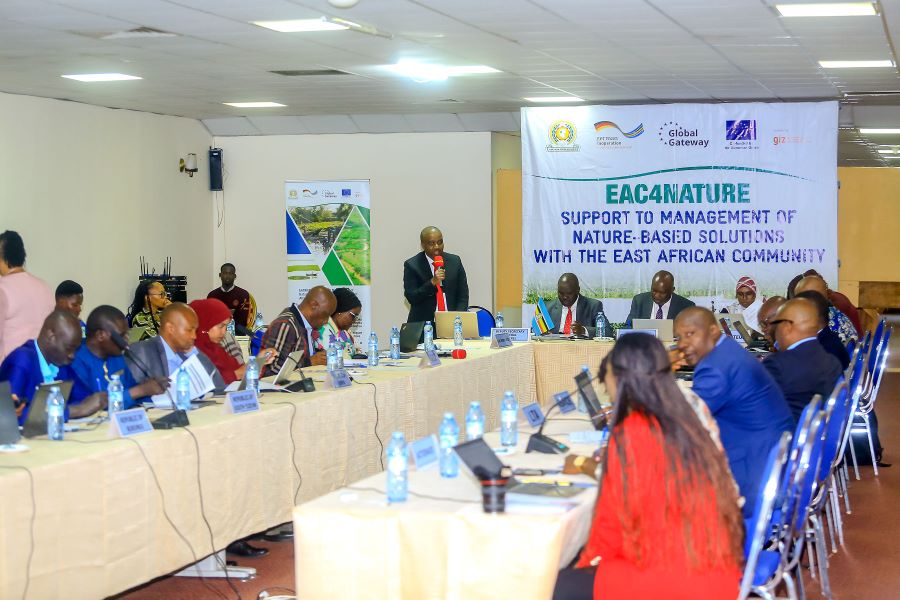
The East African Community (EAC) is ramping up its climate diplomacy efforts ahead of COP30, as regional leaders, climate experts and development partners gathered this week in Entebbe, Uganda, for a high-level meeting aimed at forging a unified stance on climate action.
The three-day Regional Experts Meeting, jointly organised by the EAC Secretariat and German International Cooperation (GIZ), is seen as a critical milestone in the region’s preparation for the 30th United Nations Climate Change Conference (COP30), set for November 2025 in Belém, Brazil.
Held from 28 to 30 July 2025, the forum brings together a diverse range of stakeholders including policymakers, scientists, and civil society actors from all eight EAC Partner States.
The objective: to agree on key climate priorities and validate a draft EAC Climate Change Policy that will guide the region’s position at COP30.

A unified voice for a vulnerable region
Speaking at the opening session, Andrea Ariik Malueth, EAC Deputy Secretary General for Infrastructure, Productive, Social and Political Sectors, underscored the urgency of a coordinated regional message.
“The East African region is highly vulnerable to the impacts of climate change – ranging from prolonged droughts and flash floods to increasing food insecurity,” he said.
“A harmonised, strategic voice will ensure that our communities’ needs are not only heard but prioritised on the global stage,” he added.
He stressed that the EAC’s participation in COP30 must be data-driven and forward-looking, leveraging scientific research and local realities to shape credible policy advocacy.
Climate policy validation underway
One of the key outcomes of the Entebbe meeting will be the validation of the draft EAC Climate Change Policy, a regional framework developed to support both adaptation and mitigation strategies. Once revised, the policy will be submitted to the Sectoral Council for formal adoption by the EAC Partner States.
Mr. Malueth described the policy process as “essential to ensure the region has a robust, inclusive, and forward-looking framework that aligns with both national ambitions and global commitments.”
Backing from development partners
GIZ, a long-time supporter of climate resilience initiatives in East Africa, reaffirmed its commitment to the region. Rosemary Masikini, Technical Advisor on Water and Climate at GIZ, noted the importance of ensuring that vulnerable regions like East Africa have influence – not just presence – at global climate forums.
“The world is watching as we approach COP30. GIZ will continue supporting the EAC and its Partner States to ensure that climate commitments are not just words, but actionable solutions,” she said.
Implications for Tanzania and the region
For Tanzania, which has experienced both climate-induced drought and flooding in recent years, the policy alignment offers an opportunity to access climate finance, enhance green infrastructure, and scale up renewable energy investment.
Experts say Tanzania’s participation in shaping the EAC’s position strengthens its leverage in climate negotiations and ensures national interests are reflected in broader regional strategies.
The EAC Secretariat, headquartered in Arusha, emphasised its continued collaboration with Partner States to ensure implementation of the policy is coherent, inclusive, and responsive to the realities on the ground.
Way forward
As the countdown to COP30 continues, the Entebbe meeting marks a major step in solidifying East Africa’s place at the negotiating table. A unified EAC voice – underpinned by a strong policy framework – will be essential not only in advocating for fair climate financing but also in driving the transition to resilient, low-carbon economies.