
By Business Insider Reporter
The government has embraced the proposal to enact a specific law aimed at shielding Tanzania’s long-term development vision from arbitrary or politically motivated alterations.
Speaking in Dar es Salaam today, July 8, 2025, the Minister of State in the President’s Office (Planning and Investment), Prof. Kitila Mkumbo, said the government supports the idea of anchoring Dira 2050 in law to ensure its stability and continuity across successive administrations.
“Having a specific law to protect the national development vision is not a bad idea. We, as government, have taken this suggestion seriously and we will work on it,” Prof. Mkumbo told editors during a stakeholders’ engagement session.
His remarks came in response to calls from media leaders who insisted that a legal framework is paramount to safeguard the vision, which is expected to be a critical driver of Tanzania’s long-term economic transformation.
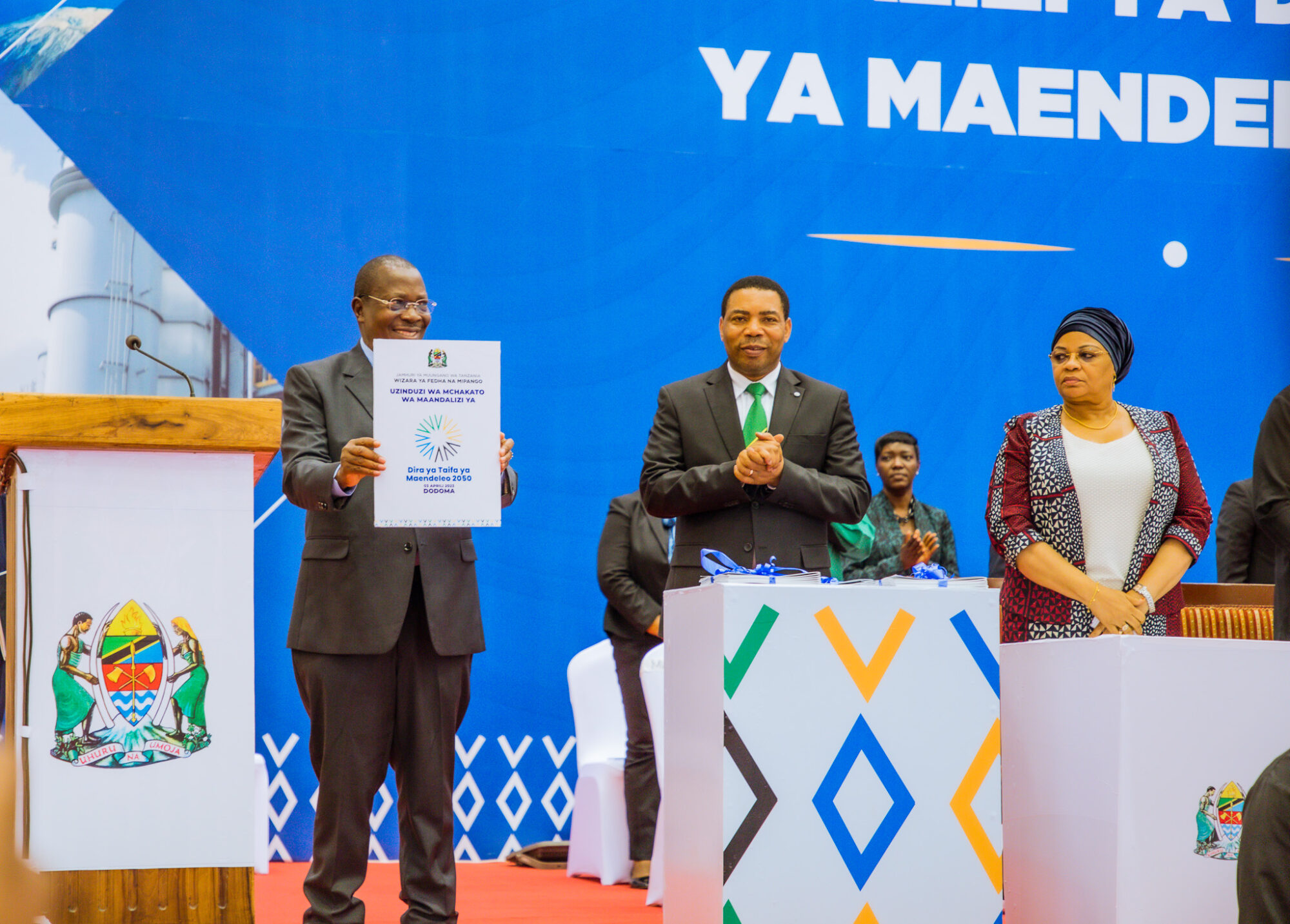
Prof. Mkumbo further clarified that the newly crafted Dira 2050, which is set to be officially launched by President Samia Suluhu Hassan in Dodoma on July 17, has already gone through several steps that give it legal weight.
“This time, unlike past experiences, the new vision has been endorsed by Parliament. That alone provides a significant legal safeguard. No one can tamper with or change the content of the Vision without seeking approval from the legislative body,” he said.
Vision 2050 is a long-term strategic document outlining Tanzania’s aspirations to become an inclusive, competitive, and industrialised upper-middle-income country by mid-century. The vision focuses on economic diversification, innovation, climate resilience, and investment in human capital.
By grounding the Vision in law, the government seeks to create policy consistency and protect the country’s development trajectory from short-term political pressures.

Transformative development agenda
Tanzania has laid out an ambitious and transformative development agenda through the National Development Vision 2050 (Dira 2050), which is set to be released by the government on July 17.
The vision outlines a 25-year roadmap to guide Tanzania towards becoming an industrialised, inclusive, competitive, and climate-resilient upper-middle-income country by mid-century.
The blueprint recognises that while Tanzania has made significant progress since the launch of Vision 2025, structural challenges – such as low productivity, limited industrial capacity, unemployment, and regional inequalities – still hinder long-term prosperity.
Dira 2050 thus aims to build a resilient and diversified economy, driven by innovation, sustainability, and people-centred development.
Key pillars
At its core, Vision 2050 rests on three transformational pillars including economic Transformation – centred on innovation, competitiveness, and inclusive industrial growth.
There is also social Transformation – aiming to ensure equitable access to quality services, education, and opportunities for all.
Environmental sustainability and resilience – is another pillar focused on protecting natural ecosystems, adapting to climate change, and promoting a green economy.
The vision emphasises strategic investments in human capital, including education, health, and skills development, as the foundation for building a productive, knowledgeable society capable of thriving in the 21st-century global economy.
Nine priority sectors
To achieve its long-term goals, the document identifies nine high-impact sectors as key drivers of economic growth and structural transformation.
These include:
Agriculture and food systems, aiming to modernise and commercialise farming, improve food security, and integrate technology across value chains.
Mining and energy, with a focus on responsible exploitation of strategic minerals and expanded access to clean and affordable energy.
Tourism and the creative economy, targeting high-end tourism, cultural heritage promotion, and creative industry development.
Blue economy, which seeks to unlock economic potential from coastal and aquatic resources while preserving marine ecosystems.
Industrialisation and manufacturing, promoting value addition, technological innovation, and the development of export-oriented industries.
ICT and innovation, designed to accelerate digital transformation, foster startups, and build a knowledge-based economy.
Transport and logistics, with infrastructure expansion to support regional integration and trade efficiency.
Financial services and investment, aiming to deepen financial inclusion, capital mobilisation, and attract private-sector investment.
Human capital development, prioritising universal access to quality health and education services.

Guiding values and principles
The vision is underpinned by national values such as patriotism, integrity, good governance, environmental stewardship, and gender equality.
It also aligns with regional and global development frameworks, including the East African Community Vision 2050, African Union Agenda 2063, and the UN Sustainable Development Goals.
Acdordingh to Prof. Mkumbo, successful implementation of Dira 2050 will depend on strong institutions, public-private partnerships, effective policy coordination, and enhanced citizen participation. “The vision also calls for agile governance, data-driven planning, and accountability at all levels,” he told reporters. As Tanzania enters the second half of the 21st century, Dira 2050 offers a bold, future-oriented framework that seeks to unleash the country’s full potential and deliver prosperity for generations to come.