By Business Insider Correspondent, Nairobi
A groundbreaking regional resource is set to revolutionise conservation planning and environmental policymaking across Eastern and Southern Africa.
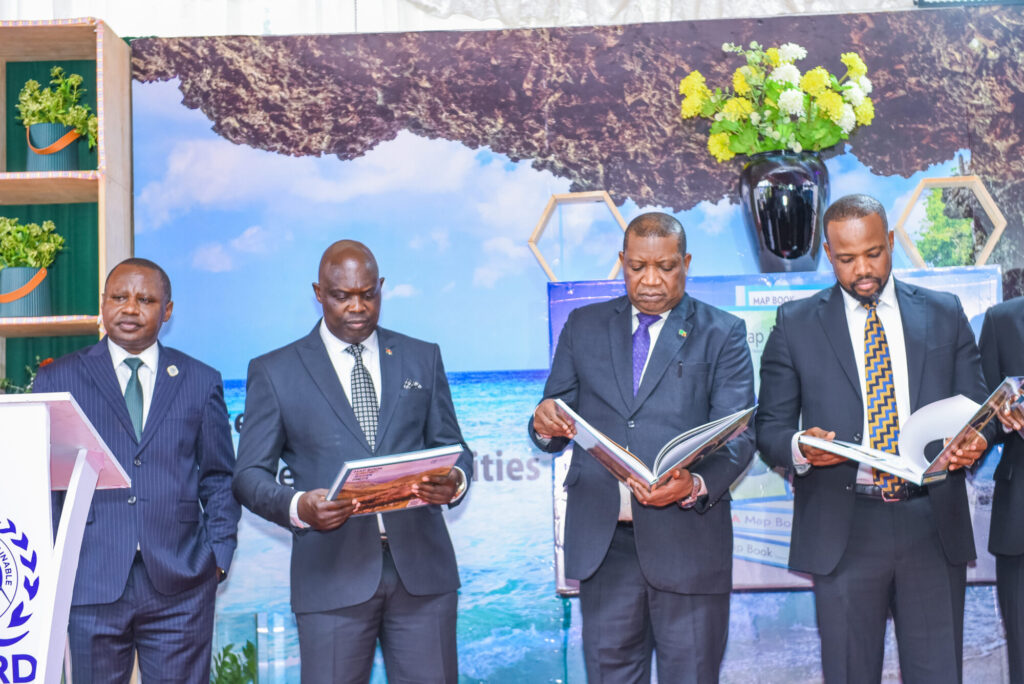
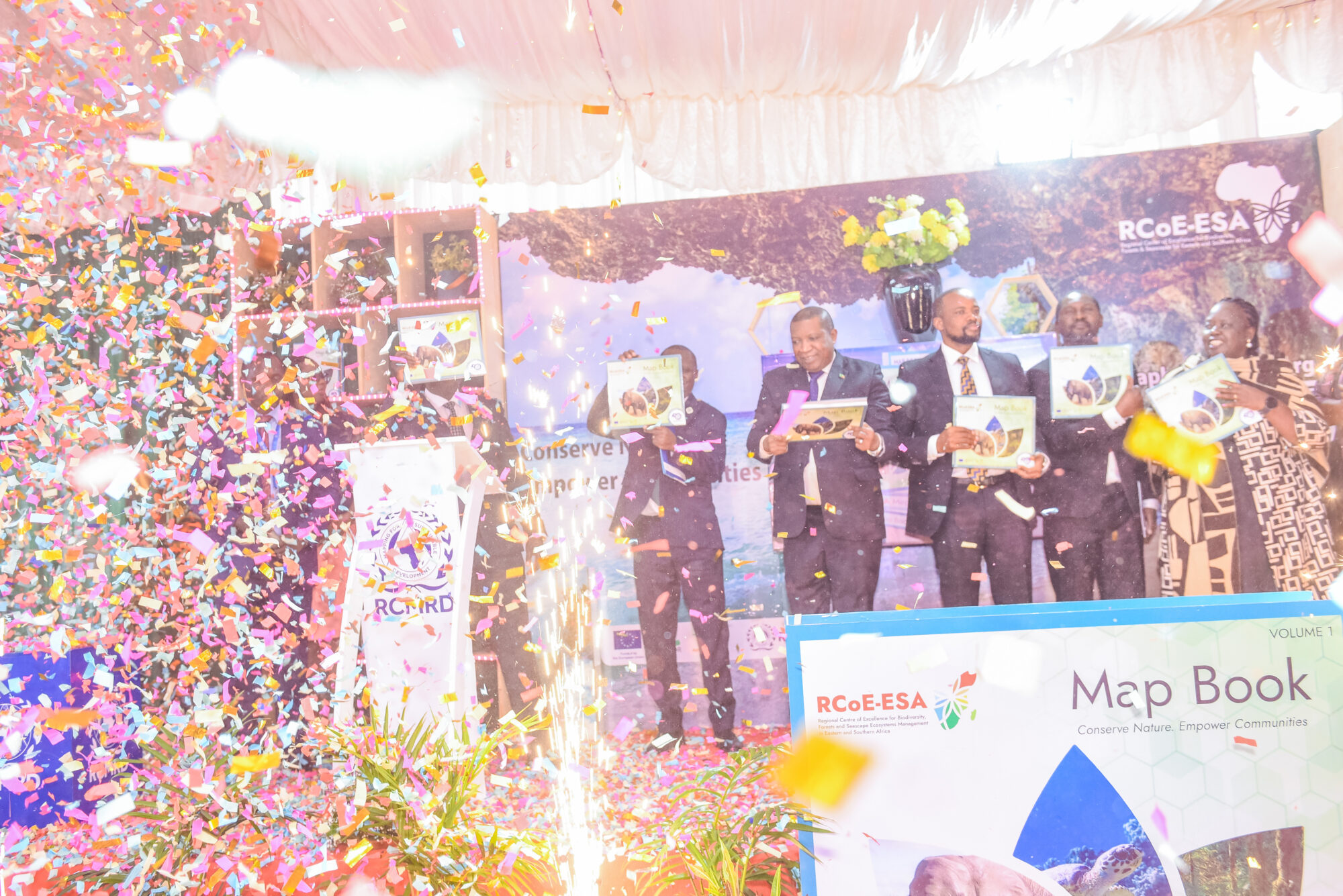
The Regional Centre of Excellence for Biodiversity, Forests, and Seascape Ecosystems Management in Eastern and Southern Africa (RCoE-ESA) has officially launched its first Map Book, offering a rich, data-driven view of the region’s ecological assets.
Unveiled during the 50th anniversary celebrations of the Regional Centre for Mapping of Resources for Development (RCMRD) in Nairobi, the Map Book is a visual and analytical tool that spans 24 countries, including Tanzania, Kenya, South Africa, Ethiopia, Uganda and others. It brings together high-quality geospatial data to identify biodiversity hotspots, trans-boundary ecosystems, and gaps in existing conservation efforts.
“This Map Book is more than just a collection of maps – it’s a call to action,” said Dr Emmanuel Nkurunziza, Director General of RCMRD. “It offers strategic insights to help governments, conservationists, and development partners make informed decisions on how to protect our region’s vital ecosystems.”
Why the Map Book matters
The Map Book arrives at a critical time as climate change, deforestation, and rapid urbanisation threaten ecosystems across the continent.
By highlighting areas in urgent need of protection and aligning with Target 3 of the Global Biodiversity Framework – which aims to conserve 30% of the Earth’s land and sea – the Map Book offers governments a roadmap for sustainable land and marine planning.
For Tanzania and its neighbours, this means access to cutting-edge spatial intelligence to support national climate adaptation strategies, attract green investments, and guide the implementation of effective conservation policies.
A strategic planning tool
Key features of the Map Book include biodiversity mapping of forests, wetlands, seascapes, and wildlife corridors.
It also contains assessment of protected and conserved areas and their effectiveness as well as data to guide the creation of new conservation zones, particularly across borders.
Insights on ecosystem degradation risks, helping inform mitigation efforts are also part of the Map Book.
In tandem with the launch, RCMRD is also conducting a workshop on the Integrated Management Effectiveness Tool (IMET), a digital platform designed to help governments and NGOs monitor and evaluate conservation outcomes.
A regional legacy
The Map Book also reflects RCMRD’s five decades of leadership in geospatial science, earth observation, and capacity building across Africa.
With the backing of its 20 member states and support from partners like the World Bank and UNEP, RCMRD now serves more than 500 million people in the region.
“This resource represents five decades of innovation in geospatial science and regional cooperation,” added Dr Nkurunziza. “We are proud to offer a tool that will shape the next 50 years of environmental resilience and development.”
The RCoE-ESA Map Book is available online and free to access via: https://rcoe-mapbook.rcmrd.org